
Root Canal Cary, NC
 Root Canal Treatment in Cary, NC
 Root Canal Treatment in Cary, NC
A root canal can save a tooth that’s badly decayed, cracked, or infected, relieving your pain and letting you keep your natural smile. Despite its reputation, a modern root canal feels much like getting a filling. At Alliance Dentistry, our dentists take the time to explain every step, keep you comfortable, and help you get back to normal quickly.
Having tooth pain? Call 919-363-3100 to schedule an appointment.
What Is a Root Canal?
A root canal, also called endodontic therapy, treats the pulp: the soft tissue inside your tooth that contains nerves and blood vessels. When the pulp becomes inflamed or infected from deep decay, a crack, an injury, or repeated dental work on the same tooth, it can cause severe pain. Left untreated, the infection can spread.
During a root canal, your dentist removes the infected pulp, cleans and disinfects the inside of the tooth and its roots, and seals it with a biocompatible filling material. Most teeth then get a crown to protect them and restore their strength.
Signs You May Need a Root Canal
Only an exam and x-rays can confirm whether you need a root canal, but these are common warning signs:
- Severe or lingering tooth pain, especially when chewing or biting
- Sensitivity to hot or cold that lingers after the food or drink is gone
- Swelling or tenderness in the gums near a tooth
- A pimple-like bump on the gums
- A tooth that has darkened in color
- A cracked or chipped tooth, especially after an injury
Sometimes an infected tooth causes no pain at all and is found during a routine exam. Either way, early treatment gives you the best chance of saving the tooth.
Benefits of Root Canal Treatment
- Pain relief. Removing the infected pulp stops the pain at its source.
- Stops the infection. Treatment keeps the infection from spreading to nearby teeth, gums, and bone.
- Saves your natural tooth. Keeping your own tooth maintains your bite and prevents neighboring teeth from shifting.
- Avoids replacement costs. Saving a tooth is usually simpler and less expensive than removing it and replacing it with an implant or bridge.
Wondering whether to save a tooth or remove it? Read root canal vs. tooth extraction: which is better?
What to Expect During a Root Canal
- Exam and x-rays. We confirm the problem and explain your treatment plan and costs.
- Numbing. Local anesthesia numbs the tooth and the area around it, so you stay comfortable.
- Cleaning the tooth. Your dentist makes a small opening, removes the infected pulp, and cleans and shapes the inside of the roots.
- Filling and sealing. The roots are filled and sealed to keep bacteria out, and a temporary filling closes the opening.
- Protecting the tooth. At a follow-up visit, we typically place a permanent crown to protect the tooth. Learn whether same-day crowns are right for you.
Most root canals are completed in one or two visits. If your case is especially complex, we’ll coordinate with a trusted endodontist (root canal specialist) so you get the right care.
Recovering From a Root Canal
Most people return to normal activities the next day. These tips will help you heal comfortably:
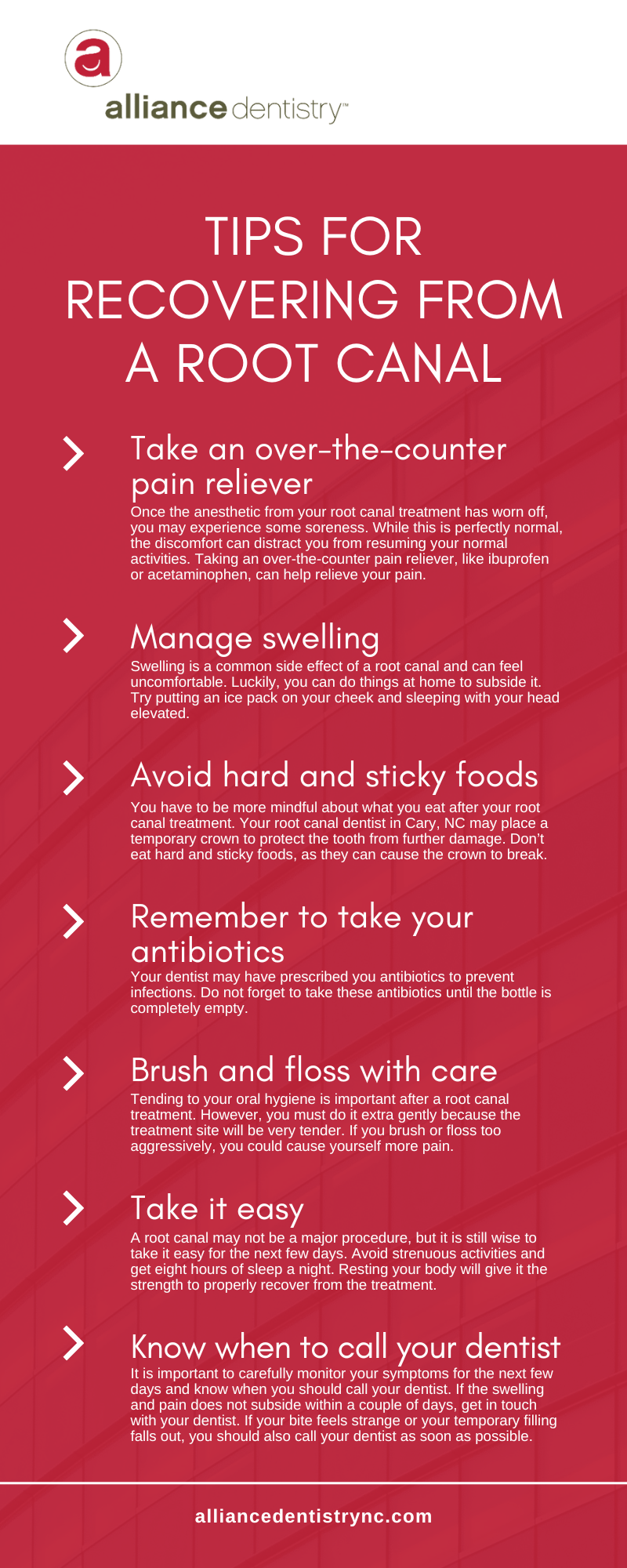
- Manage soreness. Some tenderness is normal for a few days after the numbness wears off. Over-the-counter pain relievers like ibuprofen or acetaminophen usually help.
- Reduce swelling. Hold a cold pack against your cheek, and keep your head slightly elevated when you rest.
- Be careful with the treated tooth. Until your permanent crown is placed, avoid chewing hard or sticky foods on that side, since the tooth is more fragile.
- Keep it clean. Brush and floss normally, just gently around the treated area.
- Take any medications as directed. If your dentist prescribes an antibiotic, finish it as instructed.
Call us if: pain or swelling gets worse or doesn’t improve after a few days, your bite feels uneven, or your temporary filling comes out. Mild sensitivity can linger for a short time. Learn more about pain in a tooth that has had a root canal.
Knocked-Out Teeth and Root Canals
When a permanent tooth is knocked out and put back in place, the nerve and blood vessels inside it usually can’t heal, so the tooth often needs a root canal afterward. How you handle the tooth in the first hour makes a big difference in whether it can be saved:
- Hold the tooth by the crown, never the root.
- If it’s dirty, rinse it gently with milk or water without scrubbing.
- Put it back in the socket if you can. If not, keep it in milk or saliva.
- Get to a dentist immediately. The best chance of saving the tooth is within 30 to 60 minutes.
Baby teeth should not be put back in the socket, since doing so can damage the permanent tooth developing underneath. Call us right away at 919-363-3100 for any knocked-out tooth. For more guidance, see our tips on handling dental trauma and accidents.
When to Call Our Cary Office About Tooth Pain
Tooth pain rarely goes away on its own when the nerve is involved, and waiting can turn a treatable tooth into one that has to be removed. Call us at 919-363-3100 as soon as you can if you notice:
- A throbbing toothache that keeps you up at night
- Pain when you bite down or chew
- Sensitivity to hot or cold that lingers after the food or drink is gone
- Swelling in your gums, face, or jaw
- A pimple-like bump on your gum near the painful tooth
- A tooth that has turned darker after an injury
If you have facial swelling with a fever or trouble breathing or swallowing, go to the nearest emergency room right away.
Root Canal vs. Tooth Extraction
When a tooth is infected, the two main options are saving it with a root canal or removing it. Pulling a tooth may seem simpler, but it often leads to more treatment later. A missing tooth can let nearby teeth shift, affect your bite, and lead to bone loss in your jaw. Replacing it usually means a dental implant, bridge, or partial denture.
A root canal keeps your natural tooth in place, and after it’s restored with a dental crown, it can work like any other tooth for many years. If a tooth is too damaged to save, we’ll explain why and talk through your replacement options.
What Affects the Cost of a Root Canal in Cary?
The cost of root canal treatment depends on which tooth needs care, since molars have more canals than front teeth, as well as whether the tooth needs a crown afterward and what your insurance covers. We’ll give you a clear estimate before treatment and help you understand your benefits.
Cary Root Canal Infographic
Root Canal FAQs
Does a root canal hurt?
With modern techniques and local anesthesia, a root canal feels much like getting a filling. The infection is what causes the pain, and a root canal relieves it. You may be sore for a few days afterward, which over-the-counter pain relievers usually control.
How long does a root canal take?
Most root canals take about one to two hours and are completed in one or two visits. A permanent crown is usually placed at a separate appointment.
Will I need a crown after my root canal?
Most back teeth need a crown after a root canal, because the treated tooth can become brittle. Front teeth sometimes need only a filling. We’ll recommend what’s best for your tooth.
How long does a tooth last after a root canal?
With a proper crown and good care, a tooth that’s had a root canal can last many years, often a lifetime.
Is it better to save the tooth or remove it?
Keeping your natural tooth is almost always the best choice when it can be saved. A root canal maintains your bite, prevents gaps, and avoids the cost of replacing the tooth with an implant or bridge. If a tooth is too damaged to save, we’ll talk through your replacement options.
Does insurance cover root canals?
Most dental plans cover part of the cost of a root canal and crown. We’ll check your benefits and explain your costs before treatment begins. See our insurance information.
Alliance Dentistry
202 Davis Grove Circle, Suite 102
Cary, NC 27519
Schedule a Root Canal Consultation in Cary
Tooth pain rarely gets better on its own, and treating an infected tooth early gives you the best chance of saving it. Call Alliance Dentistry at 919-363-3100 or request an appointment today.